What surgical robotics growth means for hospitals
A North American forecast puts the surgical-robotics and computer-assisted surgery market at $9.8 billion by 2034, with procurement shaped by capital spending, reimbursement, regulatory clearance, data governance and cybersecurity. The issue also follows NVIDIA’s healthcare expansion, Johnson & Johnson’s EMEA hiring plan, an EU medical-device regulation review and Hong Kong’s call for wider access to robotic surgery.
Tracking: Medicine Robotics · AI Medicine · AI Healthcare
North American surgical robotics market forecast to reach $9.8 billion by 2034
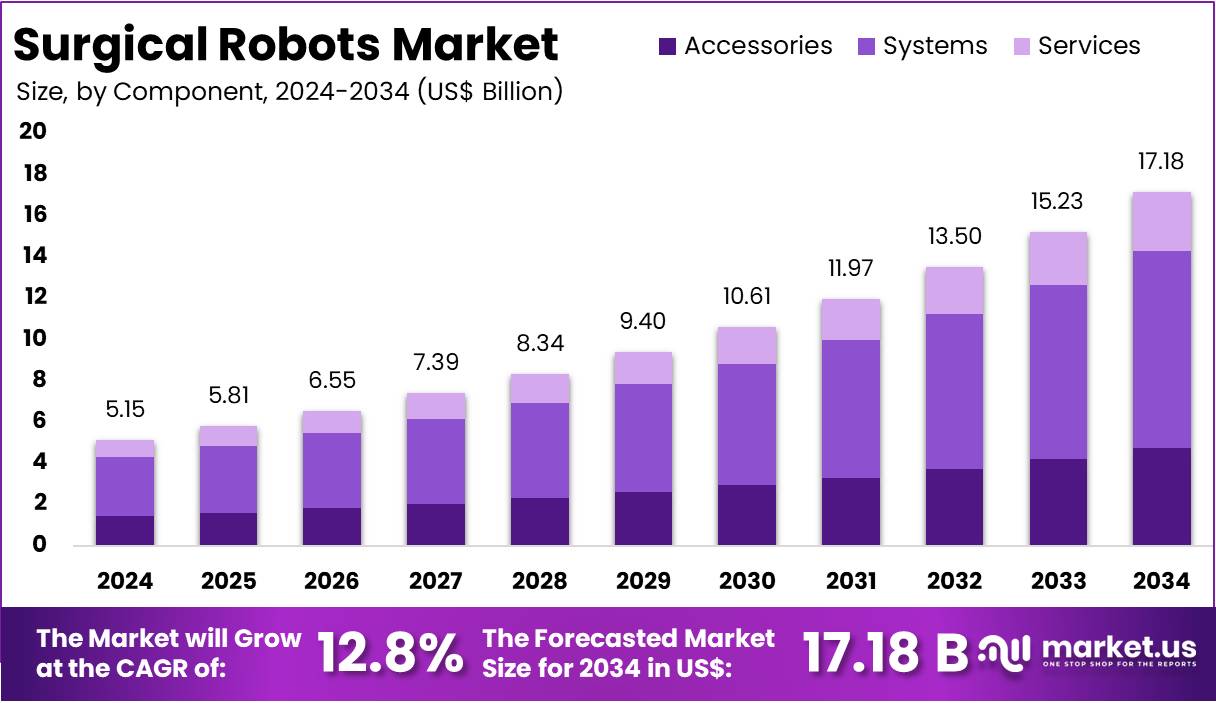
North America’s medical robotics and computer-assisted surgical systems market is projected to rise from $5.20 billion in 2025 to $5.60 billion in 2026 and $9.80 billion by 2034, according to an overview published November 7.
The forecast implies an 8.1% compound annual growth rate from 2026 through 2034. The market covers robotic arms, control consoles, imaging, intraoperative navigation, haptic controllers, analytics and AI-enabled decision support.
Adoption currently centers on large academic medical centers and integrated health systems, with regional expansion into community hospitals; hospitals’ capital spending, reimbursement policies and regulatory clearance influence procurement.
The overview says AI is moving from pilot programs into mission-critical workflows for planning, trajectory calibration, instrument tracking, complication prediction and postoperative benchmarking.
Data governance and cybersecurity remain procurement considerations for connected systems.
Key facts:
Why it matters: The forecast points to continued hospital investment in robotic platforms, related disposables, service contracts and AI software.
Large health systems are positioned to adopt earlier, while community hospitals may see wider availability as vendors expand beyond major centers. Procurement decisions will depend on more than clinical capability.
The overview identifies reimbursement, regulatory clearance, data governance and cybersecurity as constraints, particularly as AI tools move into planning, intraoperative support and outcome measurement.
The next observable shift is whether regional hospitals adopt these systems and whether AI modules become recurring components of surgical technology contracts.
NVIDIA Healthcare Chief Outlines AI and Robotics Expansion

A Nov. 9 episode of The Heart of Healthcare examines NVIDIA’s expanding healthcare role.
Kimberly Powell, the company’s vice president of healthcare, describes its work in accelerated computing and generative-AI platforms across medical imaging, drug discovery, clinical trials, AI-powered hospitals and surgical robotics.
Powell, who has spent 18 years building NVIDIA’s healthcare business, discusses what she sees as accelerating AI adoption by hospitals and clinicians.
She outlines a future in which hospitals operate more like robots, while physical AI supports autonomous wheelchairs and robotic surgery; the episode presents these as areas of development and vision, not proof of broad deployment or clinical validation.
Key facts:
Why it matters: NVIDIA’s position could give hospitals, life-sciences companies and device developers access to shared computing and AI infrastructure, with partnerships turning that infrastructure into applications.
The discussion points toward connected hospital operations and physical systems alongside software that assists individual clinical tasks.
The near-term question is execution: whether proposed uses in surgery, mobility and hospital automation become deployed, clinically validated tools.
The episode establishes NVIDIA’s strategy and Powell’s outlook, but not adoption rates, patient outcomes or regulatory status.
Johnson & Johnson seeks EMEA leader to expand structural-heart imaging adoption

Johnson & Johnson MedTech is recruiting a Business Development Manager, Structural Heart – EMEA, to lead market development across Europe, the Middle East and Africa.
The role, listed November 9, would manage two Ultrasound Clinical Account Specialists covering cardiac imaging and structural heart.
The manager would develop regional and country-level growth plans and pursue adoption of the company’s AcuNav and NUVISION intracardiac echocardiography solutions in structural-heart procedures, subject to approved indications and local requirements.
The position is based across postings in Issy-les-Moulineaux, France, and Wokingham, Berkshire, United Kingdom, and involves coordination with sales, marketing, medical affairs and professional education teams.
The posting describes a commercial and clinical-support role, not a completed product launch or reported patient outcome.
Key facts:
Why it matters: For hospitals and structural-heart teams, the posting points to a planned effort to build local support for intracardiac echocardiography-guided workflows where clinically appropriate.
It does not establish that adoption has expanded, that either product has new regulatory clearance, or that patient outcomes have changed.
The next observable step is whether Johnson & Johnson fills the role and converts its regional strategy into country-level plans and customer evaluations.
The posting ties implementation to approved indications and local requirements, so activity will vary by market.
EU review maps how medical-device regulation shapes innovation and market access
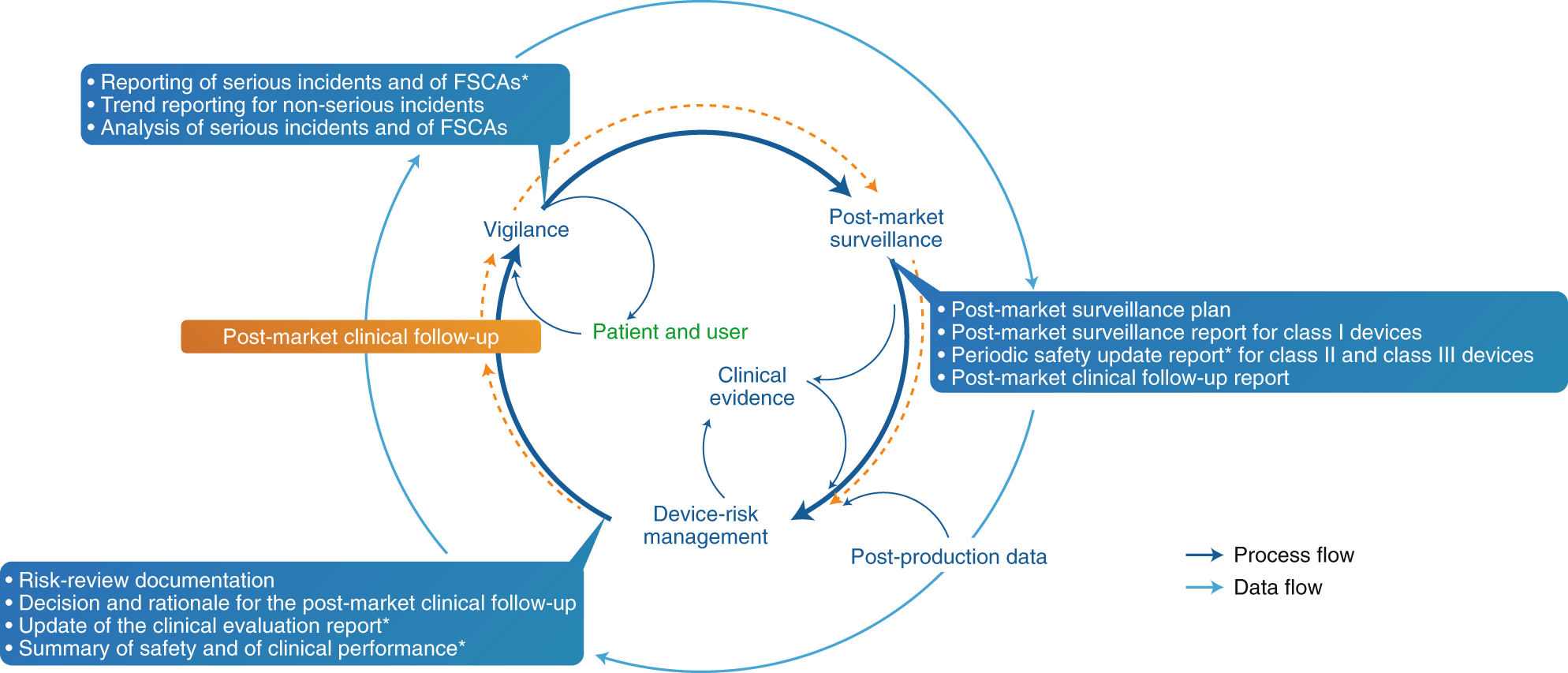
A new review of the EU-27 and EEA medical-device sector maps regulation through evidence, innovation, market access and healthcare-system impact.
It finds heavily regulated Class III implantable devices and Class C/D in vitro diagnostics grow at mid-single-digit rates, while faster-growing digital health and wearables are mostly in lower conformity-assessment classes.
Certification remains lengthy: median application-to-certificate totals are 19–22 months for medical devices and 17–19 months for in vitro diagnostics.
The review estimates that a three-year supplementary protection certificate for Class III devices could raise EU-directed development effort by 13.46% in a single-market model, or 5.6% in a two-market setting.
It also identifies recent changes including the December 2025 MDR and IVDR revision, Regulation (EU) 2026/977 setting maximum assessment timelines, October 2026 selection of the first two devices for joint clinical assessment, and phased mandatory EUDAMED use.
Their effects are not yet observable.
Key facts:
Why it matters: The review portrays regulation as a selection mechanism rather than a uniform brake on growth.
Firms able to meet heavier evidence requirements can enter the most regulated segments, while manufacturer survey evidence records a shift in first approvals and launches away from the EU.
The recent regulatory changes could alter those incentives, but the review says their effects are not yet observable.
The clearest next signals will be whether assessment timelines, EU launch decisions and access conditions change; evidence linking regulation to healthcare-system outcomes remains weakest.
Hong Kong Calls for Broader Access to Surgical Robotics

At the inaugural Surgical Futures Forum on November 9, Hong Kong Financial Secretary Paul Chan urged the surgical-robotics industry to make robotic surgery affordable beyond the best-resourced hospitals.
Global surgical-robotics penetration remains below 5%, according to figures cited at the forum.
The event also highlighted Medtronic’s roughly US$700 million investment in Hong Kong-based Cornerstone Robotics, announced in September, alongside distribution rights for Cornerstone’s surgical system in selected international markets.
Rollout timing and scope have not been detailed. Chan presented Hong Kong as a base for patient capital, regulation, clinical data and cross-boundary trials.
Cornerstone’s platform is installed at a leading surgical training centre in Strasbourg, France, while the article says robotic systems remain concentrated in well-resourced hospitals and training centres.
Key facts:
Why it matters: Chan’s call puts affordability and deployment at the centre of Hong Kong’s surgical-robotics strategy.
Hospitals without large capital budgets could eventually offer robot-assisted procedures, but current systems remain concentrated in well-resourced institutions and training centres.
The next test is whether Cornerstone and Medtronic can lower costs, reduce system footprints and simplify training. Until pricing and rollout details emerge, the partnership’s practical effect on everyday patients remains limited.